Backwash Font Review: Handwritten Typeface for Small Business
Last Tuesday afternoon, I sat down at my kitchen table with a stack of kraft paper labels, a pair of scissors, and a fresh pot of coffee. My small candle business had been running on autopilot for months, and I knew the packaging needed a refresh. The labels I had been using were fine. They were functional. But they did not feel like me. I wanted something that captured the handmade, personal care I pour into every soy wax batch. That is when I opened Backwash for the first time, and within ten minutes, I knew this handwritten font was about to change everything—not just my labels, but how my customers see my brand.
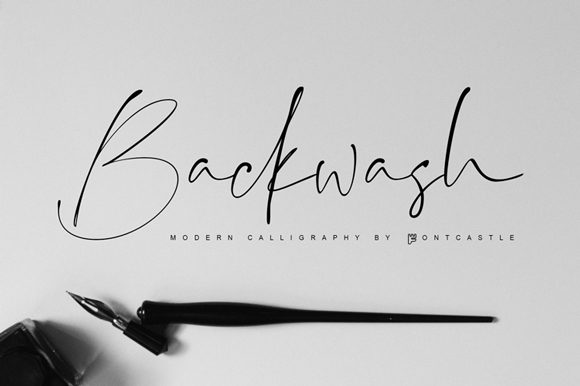
Backwash is a thin, stylish handwritten font that brings a sense of authenticity to any project. It is not trying to be perfect, and that is exactly what makes it so effective. The strokes feel natural, as if someone sat down with a fine pen and wrote each letter with intention. For a small business owner who wants customers to feel a personal connection, that kind of warmth is gold. Whether you are designing a product label, a menu, a thank-you card, or a social media graphic, this font makes your words look like they mean something.
Why a Handwritten Font Matters for Small Business Branding
When you run a small shop, a bakery, a skincare line, or a boutique, you are competing with big names that have polished, corporate branding. Your advantage is not size—it is personality. People buy from small businesses because they want the story, the care, the human touch. Your typography should reflect that. A handwritten font like Backwash tells customers, “Someone made this by hand. Someone cared about the details.” It builds trust before they even read what your label says.
Typography shapes first impressions faster than almost any other design element. If your product packaging uses a generic system font, it can feel cold or forgettable. Swap that out for Backwash, and suddenly your candle jar or bakery box feels like it came from a friend. That shift in perception is not just about aesthetics—it directly affects how customers remember your brand and whether they come back.
Putting Backwash to Work on Real Business Materials
I tested Backwash across several customer-facing pieces to see how it held up. Here is what I found.
Product Labels and Packaging
I printed new labels for my candle line using Backwash for the fragrance names and short descriptive phrases. The thin, elegant strokes looked beautiful on small round labels applied to amber glass jars. The font stayed readable even at 10 point, which surprised me. Many handwritten fonts become muddy when scaled down, but Backwash keeps its clarity. If you make soap, lotion, candles, or food products, this font works wonderfully for the main product name or a short tagline. Just keep longer ingredient lists or nutritional information in a clean sans serif font so everything stays easy to read.
Thank-You Cards and Stickers
I also used Backwash to print a small run of thank-you cards that go inside every order. The handwritten style made each card feel like a personal note, even though I printed dozens at once. Customers have mentioned that the cards make the unboxing experience feel more thoughtful. That kind of feedback is priceless for a small business. Adding a matching sticker with your shop name in Backwash ties the whole package together and reinforces your brand identity every time someone sees it.
Social Media Graphics and Online Shop Banners
For Instagram posts and my Etsy banner, I used Backwash for headlines and promotional text. It paired beautifully with a clean sans serif font for body copy. The contrast between the hand-drawn feel of Backwash and the clean lines of a simple sans serif creates a professional, balanced look. On mobile screens, the font remains legible as long as you keep the text size generous. Avoid using it for long paragraphs on social media—save it for short, punchy phrases that grab attention.
Where Backwash Shines Best
Based on my testing, Backwash is ideal for display use: headlines, product names, logos, packaging titles, decorative accents, and short quotes. It is a display font at heart, meaning it works best when you give it room to breathe. Think of it as the star of your design, not the supporting cast. Use it on bakery boxes, boutique tags, café blackboards, coaching brand mood boards, or handmade product packaging. It adds a layer of sophistication that feels approachable rather than pretentious.
If you need to write longer text, like a product description or a menu item list, pair Backwash with a clean serif or sans serif font. A simple pairing like Backwash for the heading and a light sans serif for the body keeps your design cohesive without overwhelming the reader. The key is balance—let Backwash do the storytelling, and let your secondary font handle the details.
What to Check Before You Use Backwash Commercially
Before you start printing labels or uploading banners, there are a few practical details worth confirming. Backwash is PUA encoded, which means you can access all the alternate glyphs, ligatures, and special characters included in the font. This is essential if you want to customize your text and avoid the repetitive look that sometimes comes with handwritten fonts. You can mix and match letter variations to make your product name feel truly unique.
Check which file formats are included—typically you will get a .otf or .ttf file that works across design software like Adobe Illustrator, Photoshop, Canva, or even Microsoft Office. If you plan to use Backwash on physical products like packaging, labels, merchandise, or print materials, confirm the commercial license covers that use. Some fonts restrict commercial use or require an extended license for products sold at scale. Read the licensing terms carefully so your business stays compliant. Also, test the font for multilingual support if your product labels or marketing materials include languages beyond English.
How Typography Shapes Your Brand Perception
Every font carries a mood. A bold sans serif can feel modern and reliable. A delicate serif can feel elegant and timeless. A handwritten font like Backwash brings spontaneity and care. When you build a brand identity around a font that feels true to your values, you create consistency across every touchpoint—your packaging, your website, your social media, your business cards. That consistency builds recognition. Over time, customers do not just see your product. They see your style, your effort, and your story.
Using a premium font like Backwash signals that you care about quality. It tells customers that you invest in your brand, even in the small details. That trust extends to your products themselves. If the label looks thoughtful, the candle inside probably will be too. That is the power of good typography. It works quietly, but it works.
Final Thoughts on Backwash for Small Business Branding
Backwash is not just a pretty font. It is a practical tool for any small business owner who wants to look polished without losing their handmade feel. It performs well on printed labels, digital graphics, and packaging. It pairs nicely with a clean sans serif or a simple serif. It gives you creative flexibility with PUA encoding. And most importantly, it helps your brand feel like it belongs to a real person.
If you are refreshing your product line, updating your menu, designing a new logo, or just want your shop to feel more cohesive, give Backwash a try. It might be exactly the typeface you did not know your brand needed.