Basyirah: A Handwritten Font That Brings Joy to Small Business Branding
I was sitting at my kitchen table last Sunday afternoon, surrounded by kraft paper tags, thank-you cards, and a stack of new product labels for my little gift shop. I had been using the same basic system font for everything—product tags, social media banners, even my logo—and it all felt a bit flat. Not bad, exactly, but forgettable. And for a small business, forgettable is the last thing you want to be.
That afternoon, I decided to refresh my brand materials. I opened up my design software, pulled up a few font options I had been meaning to try, and landed on Basyirah from Script Amp. Within minutes, my plain thank-you cards looked like something you would want to keep on your desk. My product tags suddenly felt personal and warm. And my logo mockup? It finally had the charm I had been chasing for months.
Here is what I learned about this font, why it works so well for small business branding, and how you can use it to make your own shop, café, or brand feel more polished and memorable.
What Makes Basyirah Different from Other Handwritten Fonts
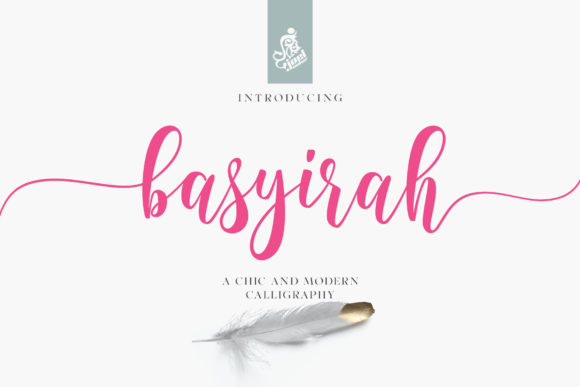
There are a lot of handwritten fonts out there. Some feel rushed. Some feel too stiff. And many of them just do not carry the same warmth you get from real hand lettering. Basyirah is different. It is a chic and joyful handwritten font that manages to feel both elegant and approachable at the same time. The letters have a natural rhythm, with gentle flourishes and a slightly playful bounce that makes every word look like it was written by hand with care.
The style sits somewhere between a modern calligraphy script and a relaxed handwritten note. It is not overly formal, so it does not feel cold or distant. But it also is not so casual that it looks messy or unprofessional. That balance is hard to find in a premium font, and it is exactly what small business owners need when they want their branding to feel personal without sacrificing quality.
When I tested Basyirah on a few mockups—a candle label, a bakery box, a boutique tag—the first thing I noticed was how much personality the font added. A simple product name that looked ordinary in a standard sans serif font suddenly felt like it belonged on a shelf in a beautifully curated shop. That is the kind of first impression that makes customers stop scrolling or slow down to read your packaging.
Where Basyirah Shines in a Small Business Brand
One of the first things I do with any new font is test it across different materials. I want to know whether it will hold up on a tiny product label, whether it will look good on a social media graphic, and whether it will work in my logo without breaking apart. Here is where I found Basyirah to be especially strong.
Logo Design and Brand Headlines
Basyirah is naturally suited for display text—short phrases, brand names, and headlines that need to stand out. I tested it for a logo concept for my shop name, and the letters sat together beautifully. The ligatures and alternate characters (which are included in the font file) gave me options to adjust the spacing and flow of the wordmark so it looked custom rather than off-the-shelf. For any small business owner who wants a logo that feels handwritten and welcoming, this font is a solid choice.
Product Labels and Packaging Design
If you sell physical products—skincare, candles, tea, soap, baked goods, stationery—your label is often the first thing a customer touches. A font that feels warm and personal can make that moment meaningful. I used Basyirah for a product name on a gift tag, and the result was exactly what I wanted: elegant enough to feel special, but friendly enough that customers would not be intimidated. It works beautifully on packaging design where you want the text to feel like part of the product story, not just an afterthought.
Thank-You Cards, Business Cards, and Stickers
These small printed pieces are where handwritten fonts really come to life. A thank-you card printed with Basyirah feels like a note from a friend rather than a receipt from a transaction. I printed a small batch of thank-you cards for my online orders, and the response was noticeable—several customers mentioned that the card made them smile. That kind of emotional connection is hard to build with a standard typeface, but Basyirah makes it feel effortless.
Social Media Graphics and Online Shop Banners
On digital screens, Basyirah holds up well when used for short, impactful text. I updated a few Instagram templates with quote overlays and sale announcements, and the font stayed readable even on mobile screens. The key is to use it for the main headline or callout and pair it with a clean sans serif font for supporting details like pricing or product descriptions. That combination keeps your graphics looking professional and intentional without overwhelming the viewer.
Readability Tips for Using a Handwritten Font Like Basyirah
Handwritten fonts can sometimes be tricky when it comes to readability, especially on small labels or mobile screens. Basyirah fares better than most because the letterforms are clear and the spacing is generous. But there are a few guidelines I follow to make sure the font stays effective in every context.
- Use it for short text. Basyirah is at its best in headlines, product names, taglines, and logos. Avoid using it for long paragraphs, ingredient lists, or detailed descriptions. Reserve it for the parts of your design that need the most personality.
- Give it room to breathe. Because handwritten fonts have organic shapes, they need a little extra space around them. Avoid crowding the text with too many other design elements. A simple background and plenty of white space let Basyirah shine.
- Test it at small sizes. Before you print a run of labels, print a test sample at your actual label size. Basyirah reads well at moderate sizes, but very small text can lose some of the detail. If your label needs tiny text, consider using a clean serif font or sans serif font for the fine print and save Basyirah for the main product name.
- Watch your contrast. Light-colored fonts on white backgrounds can wash out the delicate strokes of a handwritten style. Stick to darker inks on lighter backgrounds, or use a white or metallic version on dark packaging for a more dramatic effect.
Simple Font Pairing Ideas That Work with Basyirah
One of the smartest things you can do for your brand identity is to pair a decorative script with a simpler, more neutral typeface. Basyirah pairs beautifully with a range of styles, depending on the mood you want to create.
- With a clean sans serif: This is my go-to combination for modern, approachable branding. Use Basyirah for your brand name or main headline, and a simple sans serif like Lato or Montserrat for body text, pricing, or contact details. The contrast between the playful script and the clean sans serif feels balanced and professional.
- With an elegant serif: If your brand is more sophisticated—think wedding stationery, fine skincare, or high-end home goods—pairing Basyirah with a delicate serif font like Cormorant or Playfair Display creates a beautiful editorial feel. This combination works especially well for editorial design and logo design that needs to feel luxurious.
- With another script or handwritten font: I generally advise against pairing two decorative scripts together, because they can compete for attention. But if you want to layer styles, use Basyirah as your main display font and a very simple, understated handwritten font for secondary text. Keep the contrast clear so one does not overpower the other.
What to Check Before You Use Basyirah on Your Products
Before you commit to any commercial font for your business materials, there are a few practical steps worth taking. First, check what is included in the font package. Basyirah from Script Amp comes with standard glyphs, alternates, and ligatures, which give you creative flexibility. Make sure you understand the commercial font licensing terms—especially if you plan to use the font on products you sell, on packaging, in digital templates, or for client work.
It is also worth confirming the file formats you receive. Look for both OTF and TTF formats so you can use the font on different operating systems and design software. If you work with embroidery machines, print-on-demand platforms, or website builders, test the font in those environments early to avoid surprises later.
Lastly, consider the overall brand identity you are building. A font like Basyirah brings joy, warmth, and a handmade feel to your brand. But consistency matters. If you switch your primary font to a handwritten style, make sure the rest of your design assets—colors, imagery, logo, packaging materials—support that same tone. When everything aligns, your brand becomes more recognizable, more trustworthy, and more memorable to the customers you want to reach.
In the weeks since I added Basyirah to my brand toolkit, my shop materials feel more like an extension of my personal style and less like generic templates. The thank-you cards, the product tags, the Instagram banners—they all finally look like they belong together. And that is exactly the kind of consistency that turns a casual shopper into a repeat customer. If you are looking for a creative font that can elevate your small business branding without feeling forced or overdone, Basyirah is absolutely worth adding to your design assets.